Warehouse Runner
Warehouse accuracy depends on judgment under pressure, a skill that passive onboarding struggles to teach. When new hires know the steps but fail the execution, the business bleeds money through rework and safety risks.
Warehouse Runner solves this by replacing static learning with a decision-making simulation. It uses progressive scaffolding to let learners practice route planning and prioritization in a risk-free sandbox. The result is a scalable, bilingual prototype that turns passive theory into active, measurable competence.



The challenge
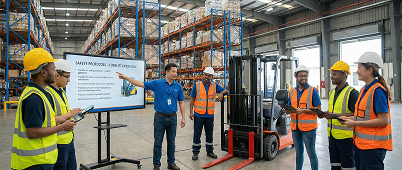
Order picking is where warehouse performance is won or lost. Research shows it can represent around 55% of warehouse operating cost, and walking/travel time can take about 60% of picking time, which means small inefficiencies stack up fast.
In practice, the biggest pain point is not “knowing the steps.” It’s executing them fast and correctly: scan the right item, confirm the right location, follow the best path, and still complete safety and quality checks. A single mis-pick has been estimated at about $22 on average, and even a small error rate can turn into major yearly cost.
This gets harder during onboarding. New warehouse associates can take 4–8 weeks to reach veteran proficiency, creating a 25% productivity gap that standard training cannot close fast enough. The goal isn’t more theory, it is to cut this ramp-up time by replacing passive instruction with realistic, pressure-tested practice.
Designing a solution

The strategy: simulation over information
I designed Warehouse Runner to move beyond simple knowledge checks. It acts as a decision-making simulator that strips away the noise of a real warehouse to focus purely on the tasks, giving learners a safe environment to practice, make mistakes without real consequences, and receive the immediate feedback they need to build true skills.
The mechanics: scaffolding complexity
To manage cognitive load, I structured the experience using progressive scaffolding. Instead of overwhelming a new hire with everything at once, the game isolates skills and layers them:
- Stage 1 (spatial logic): Plan an efficient route to eliminate backtracking.
- Stage 2 (procedural accuracy): follow that route to locate items and scan them correctly.
- Stage 3 (speed & flow): Deliver orders under time pressure, forcing the learner to balance speed with safety.
This structure turns abstract onboarding into tangible muscle memory. The scoring logic was specifically tuned to punish ‘reckless speed’ and reward precision and efficiency, reinforcing the exact behaviors needed on the floor.
My role
I led the end-to-end product vision, owning the needs analysis, instructional strategy, game mechanics, and UX flow. I directed a visual designer for the UI assets and collaborated with a Unity developer to implement the logic I defined.
The result
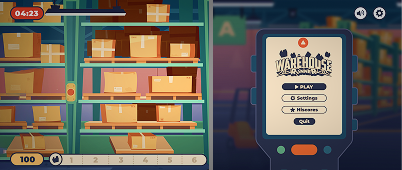
The impact: Validating the simulation model
We moved beyond ‘one-and-done’ eLearning to create an evergreen, scalable WebGL prototype. Warehouse Runner proves that complex behaviors can be trained through low-risk digital practice. It shifts the focus from ‘completion’ to competence, allowing learners to build confidence first, then consistency and speed.
The reach: Built for the frontline
Designed for the reality of logistics, the experience supports English and Spanish natively for easy rollout across diverse teams. The ‘micro-session’ structure allows associates to practice in 5-minute bursts, fitting training into the flow of work rather than pulling them off the floor for hours.
The architecture: Future-proof design
Under the hood, I architected a modular level framework. This means the business can generate new scenarios, higher difficulty, different layouts, or new safety rules, rapidly, without rewriting code. It’s not just a game; it’s a reusable engine for continuous skill development.
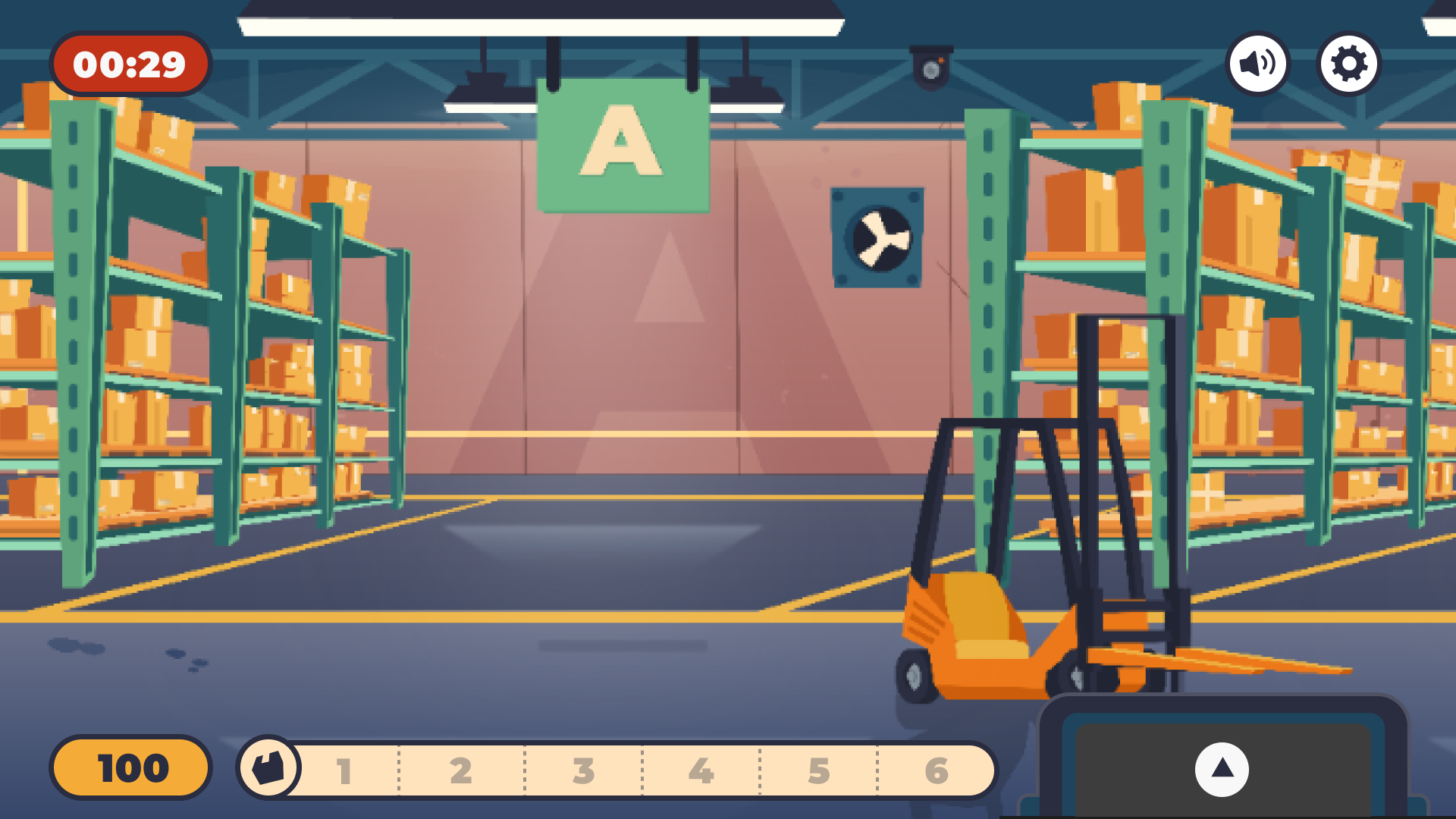
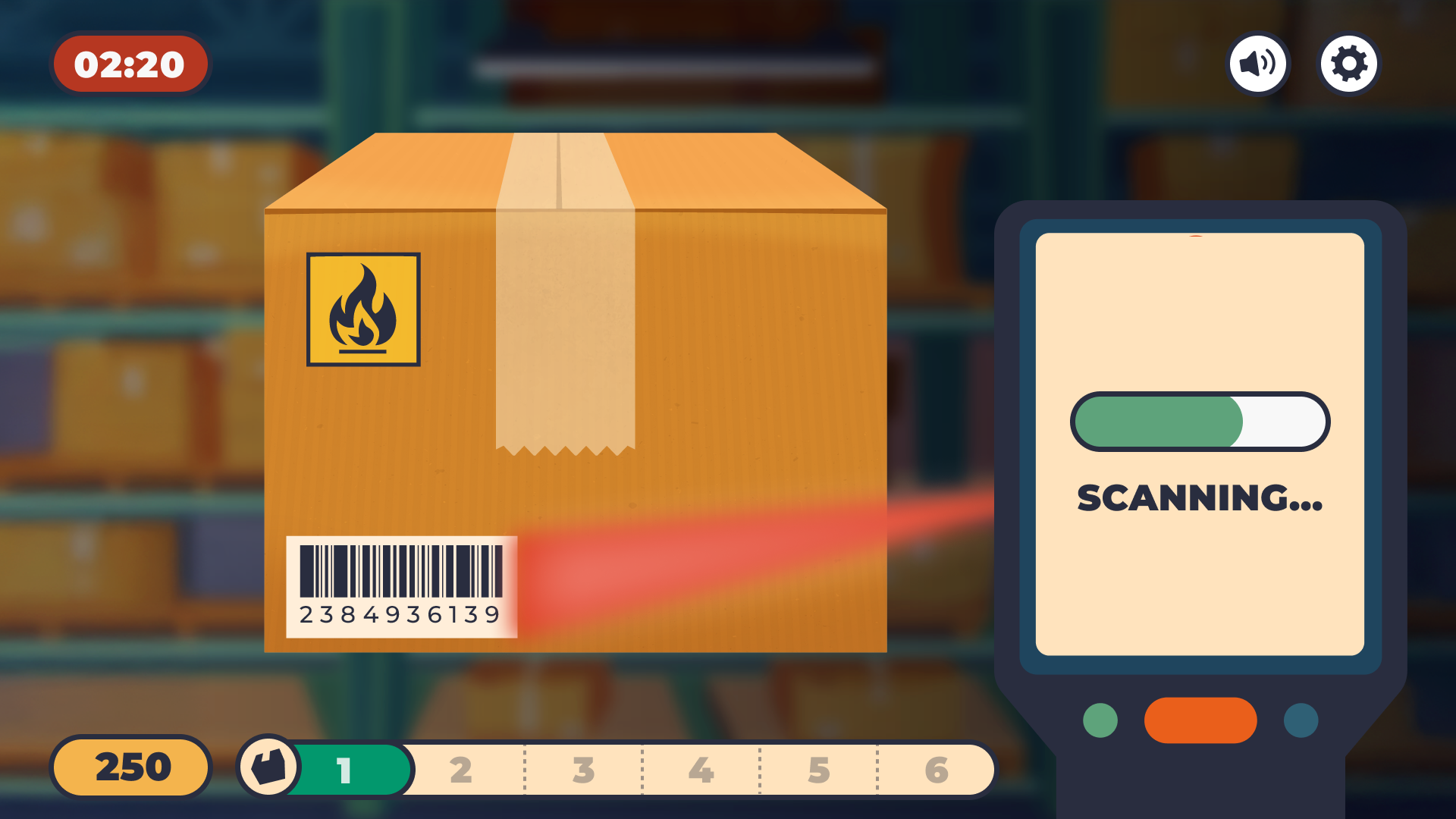
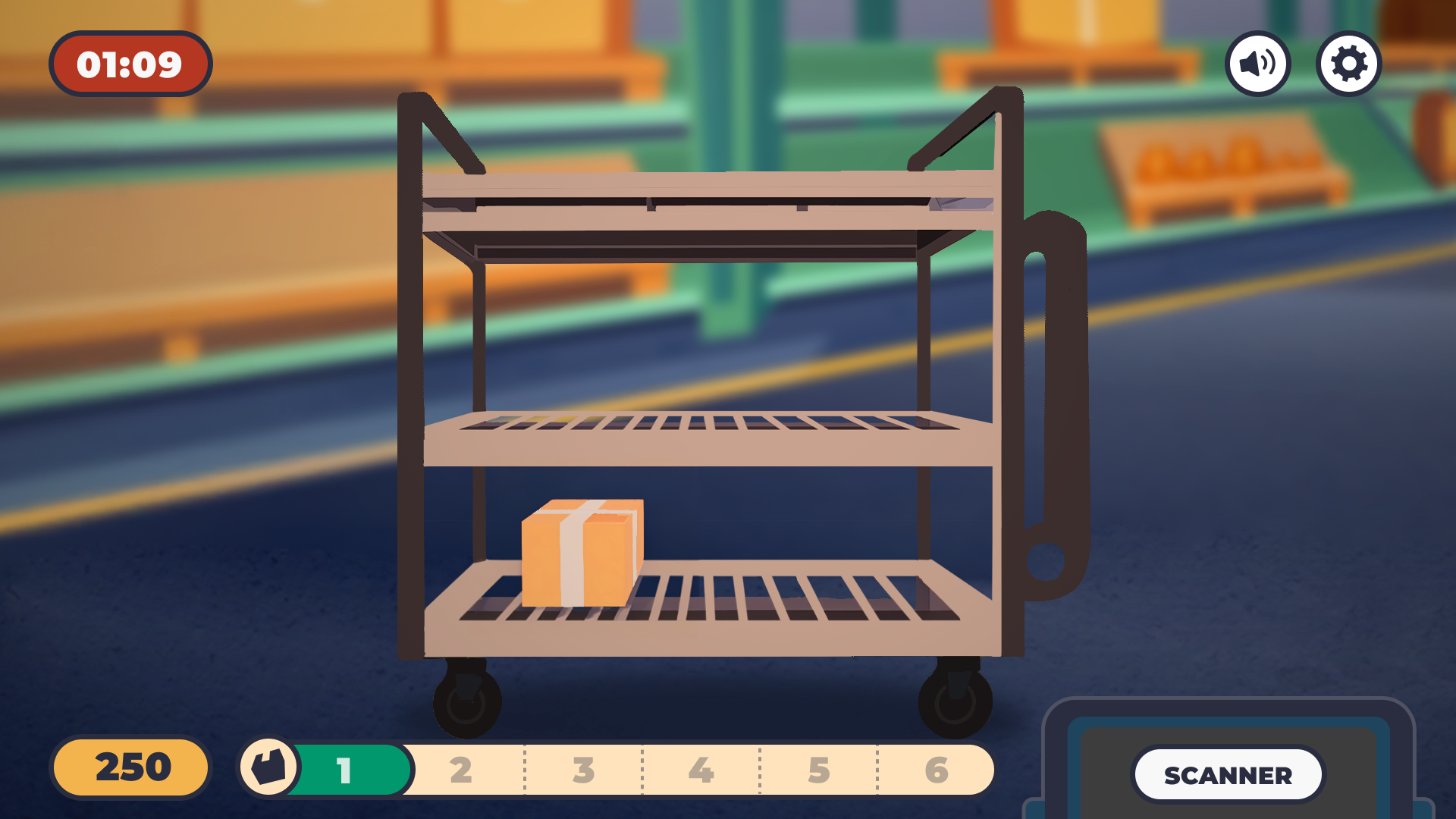
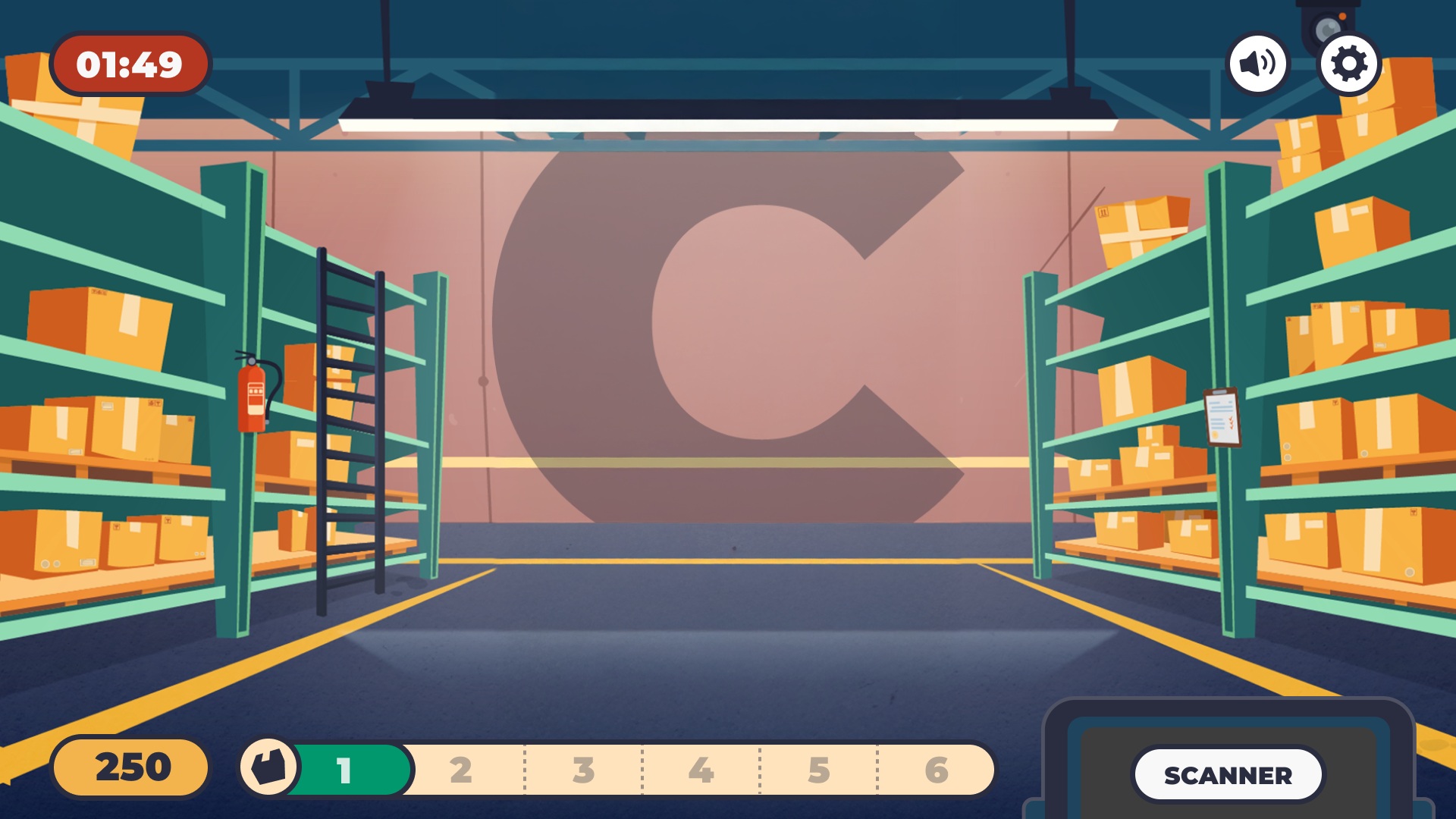
Project screengrabs

Looking for this level of quality?
I help teams build scalable, effective and engaging learning solutions. I’m currently available for new opportunities.