Patient Safety
In healthcare, knowing the protocol isn’t enough; nurses must apply it when monitors are beeping, shifts are changing, and information is incomplete. Traditional compliance training often lists safety rules but fails to simulate the cognitive load of a real hospital environment, leaving a gap between “passing the test” and keeping patients safe.
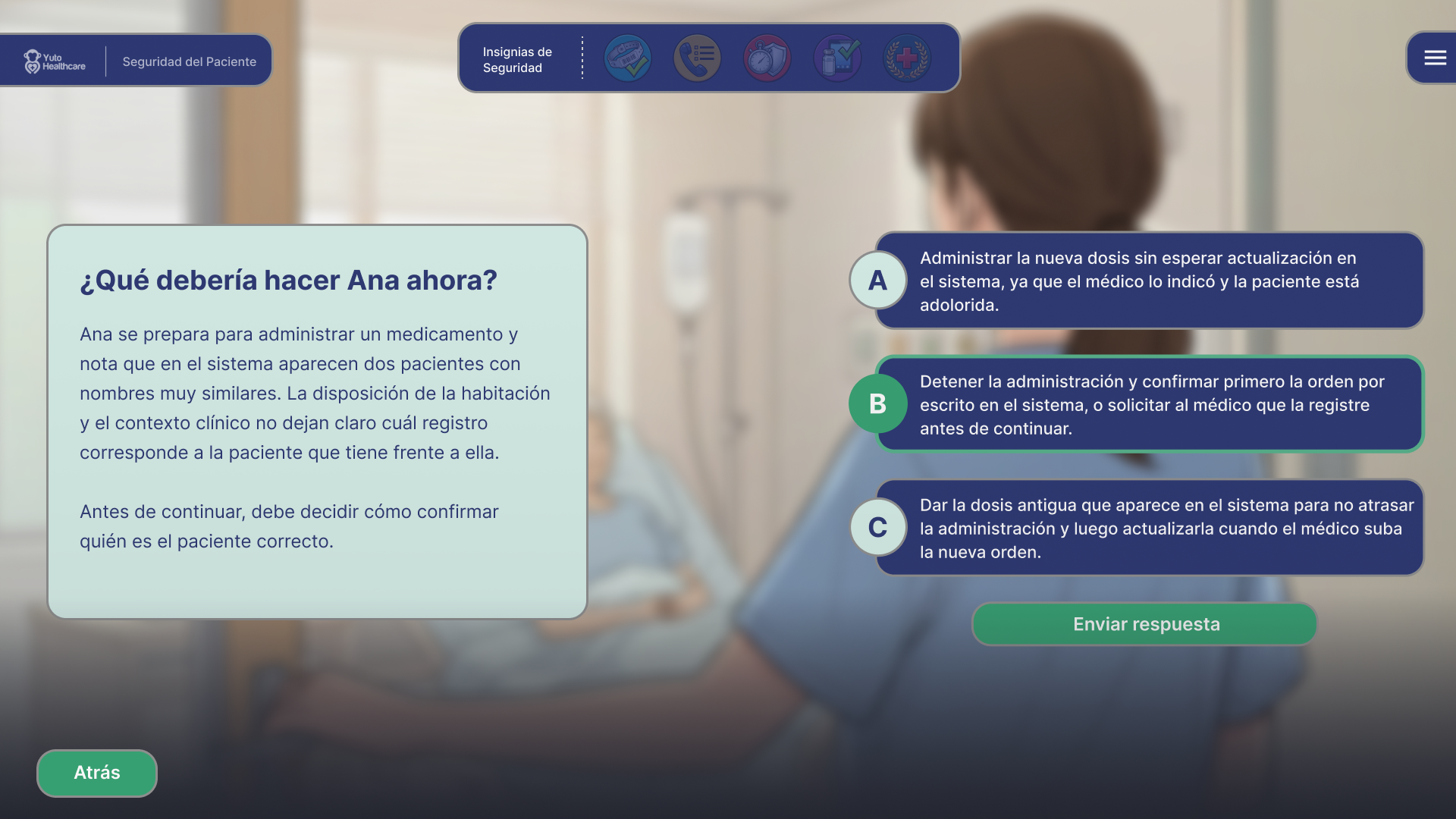
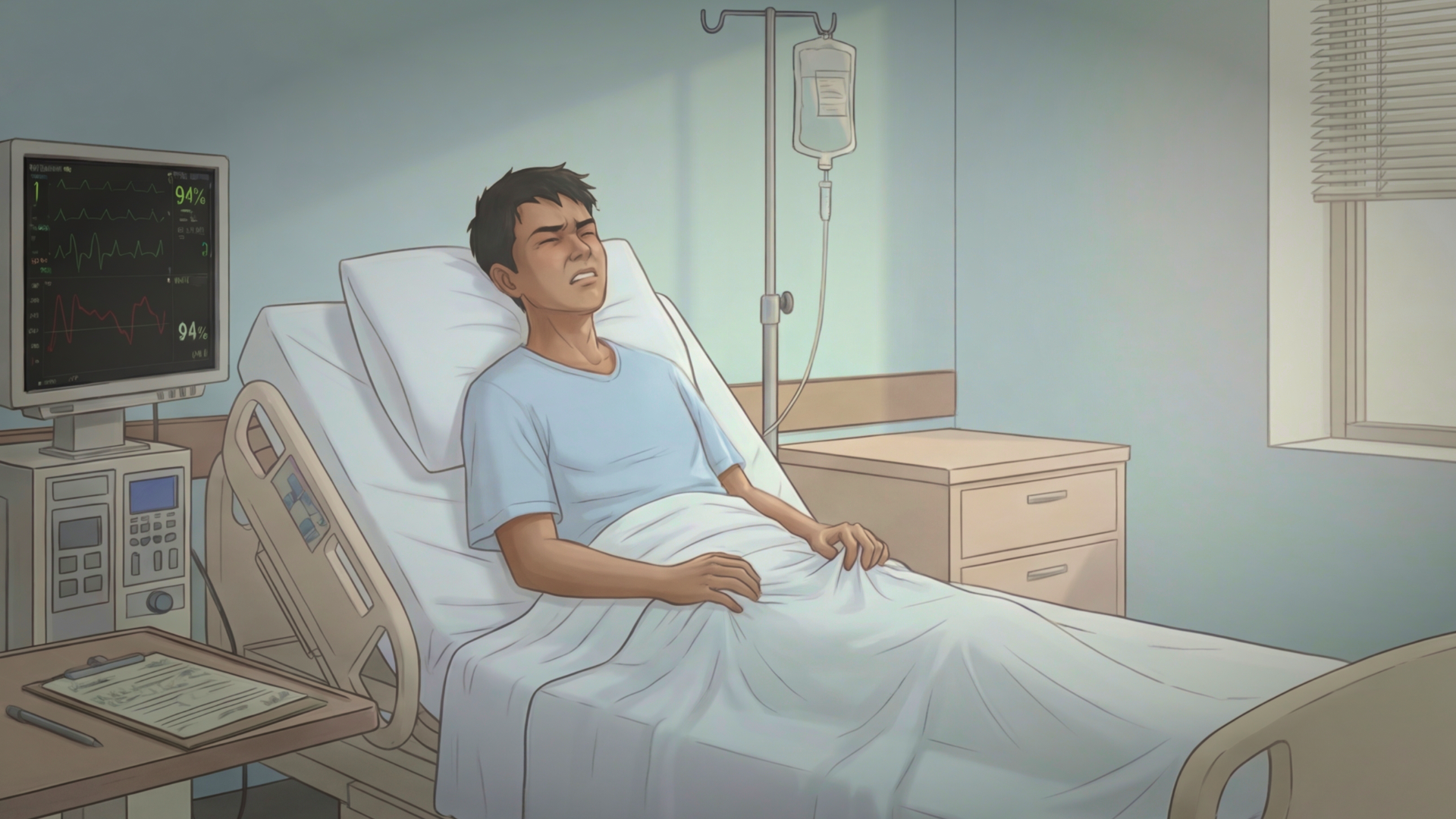
Designed for Yuto Healthcare (hypothetical client), this project bridges that gap by immersing nurses in a grounded, graphic novel-style simulation. Built in Articulate Storyline, it moves beyond static policy to a “Test Your Instinct” model. Learners step into the shoes of a nurse in a realistic hospital setting, making high-stakes decisions where every choice has immediate, visible consequences on patient health.


The challenge
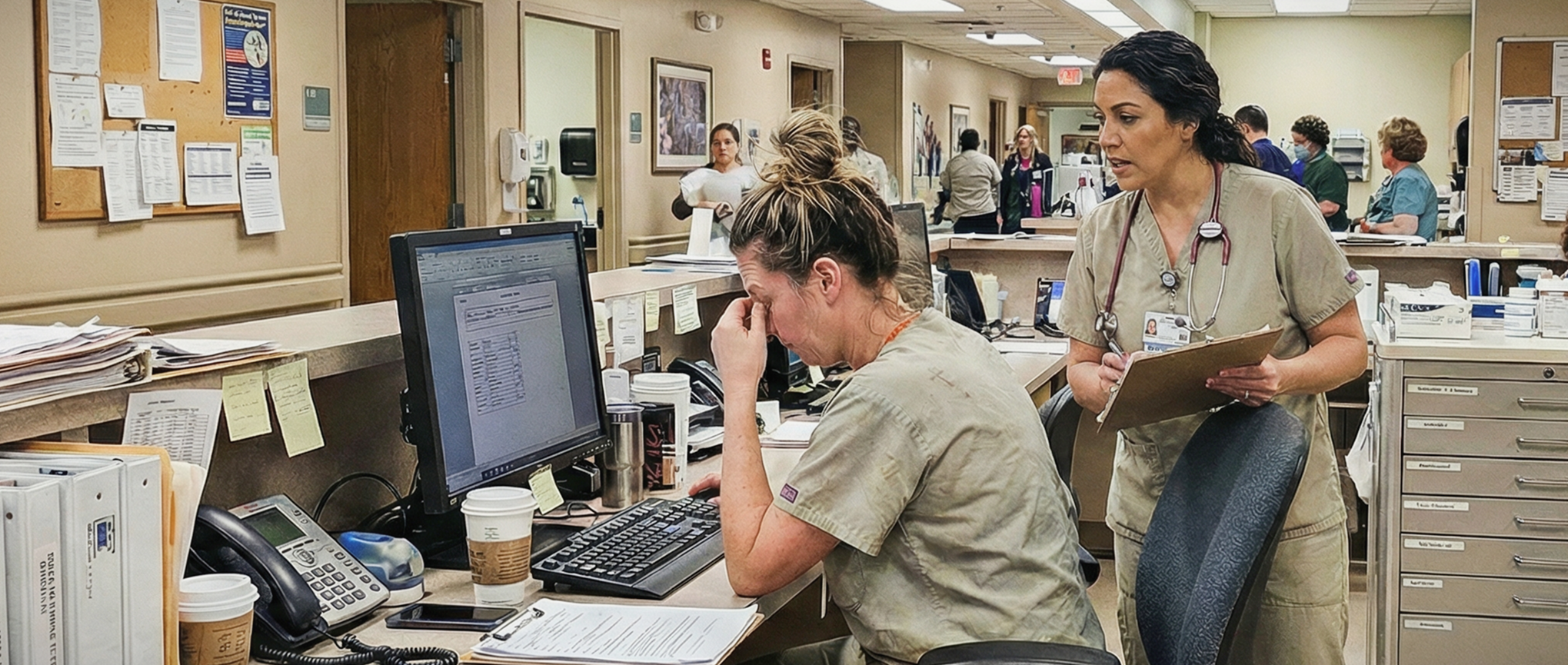
Patient safety failures rarely happen because staff do not know the policy. More often, they happen in fast-moving moments where attention is divided, information is incomplete, and small decisions carry serious consequences. For the fictional client, Yuto Healthcare, the project was designed around a familiar operational concern: reducing near-miss incidents during shift handovers, patient identification, and medication administration.
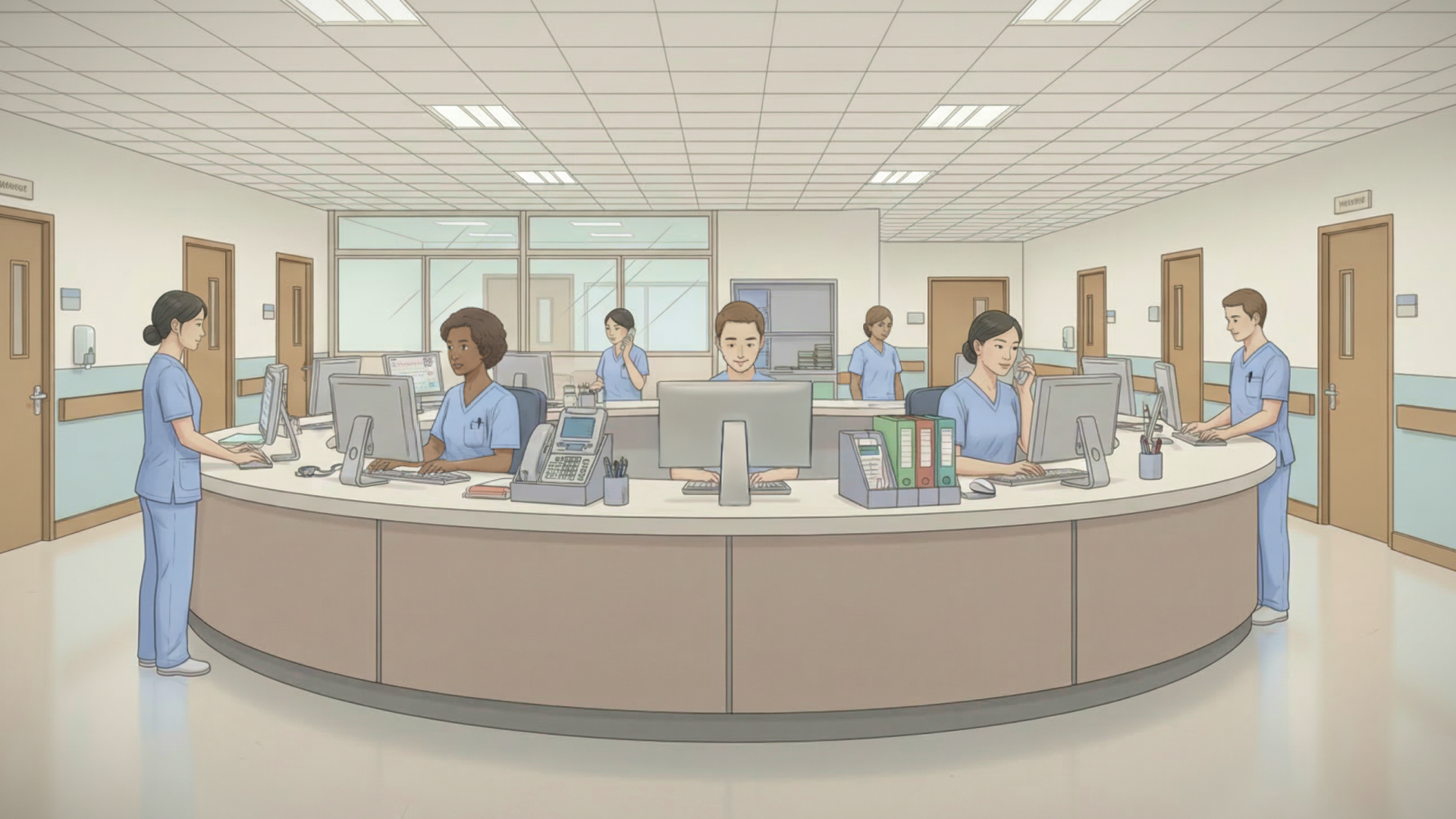
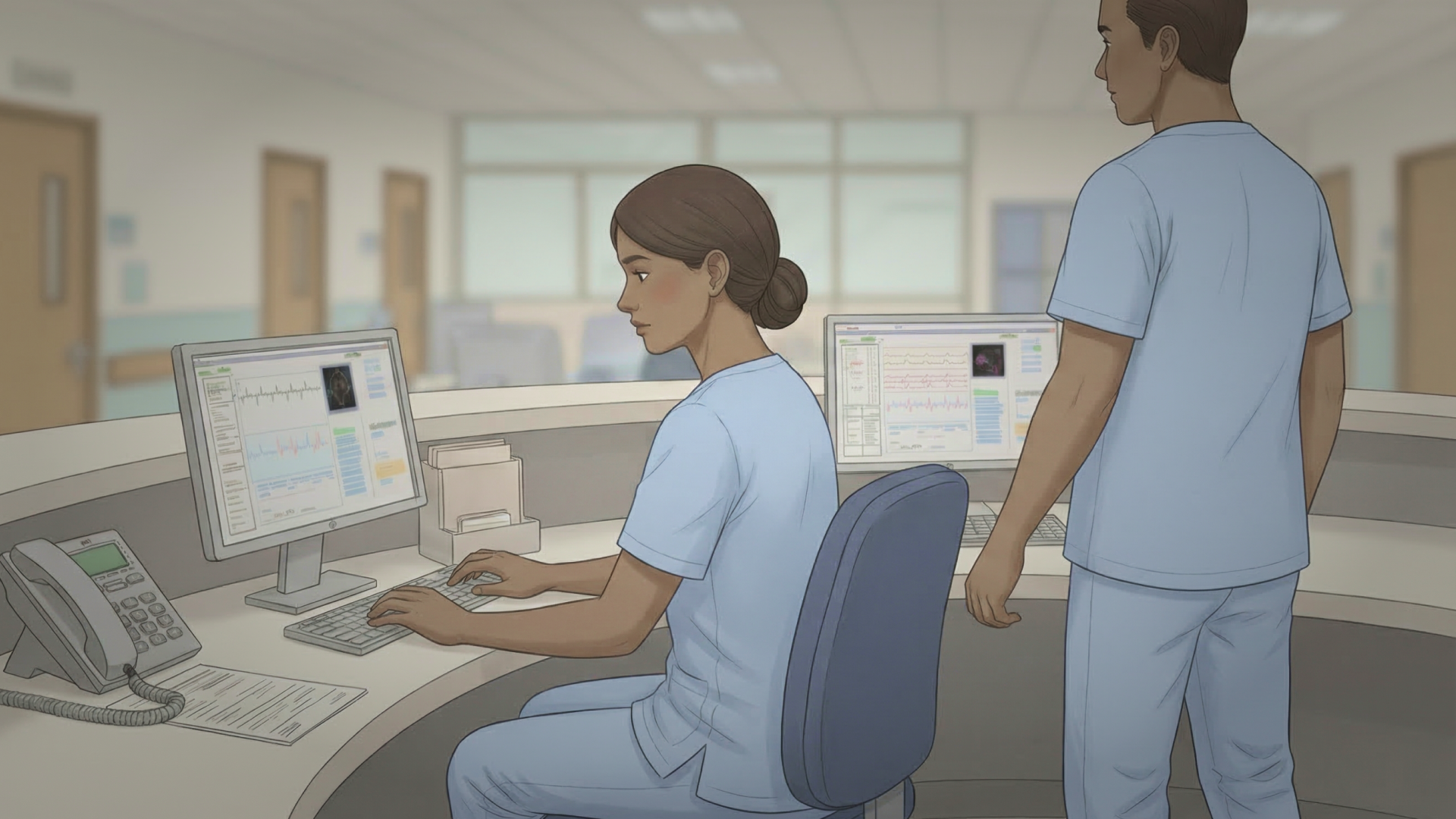
Nurses do not work in calm, linear conditions. They work in environments defined by interruptions, cognitive overload, incomplete information, and constant prioritization. Yet the existing training experience was largely static and academic: dense content, limited interaction, and little opportunity to rehearse judgment in context. It explained the rules, but it did not prepare learners for the friction of applying them in real time.
This project made sense because patient safety depends not only on what staff know, but on how they respond in the moment. The aim was to design a learning experience that mirrored the pressures of clinical work and gave nurses space to practice safer decision-making before those moments happened on the floor.
Designing a solution
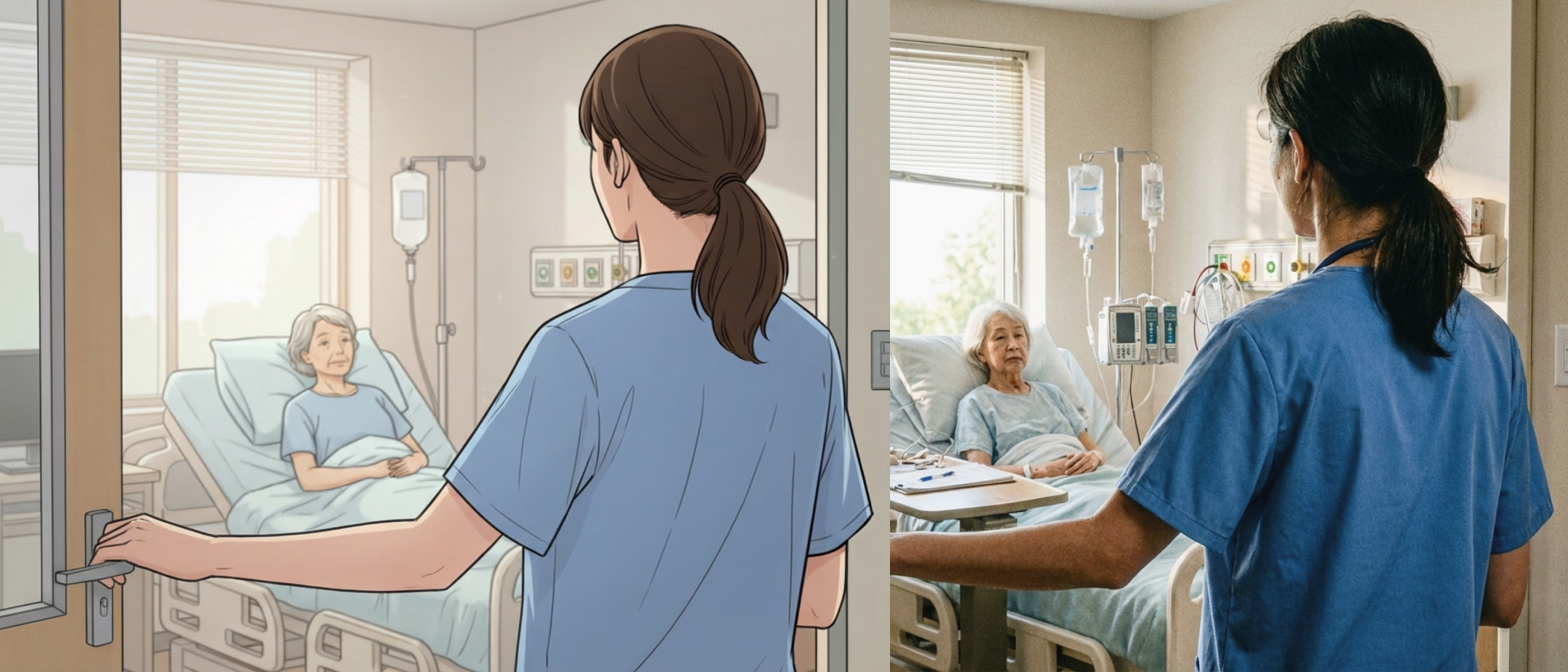
Learning through action
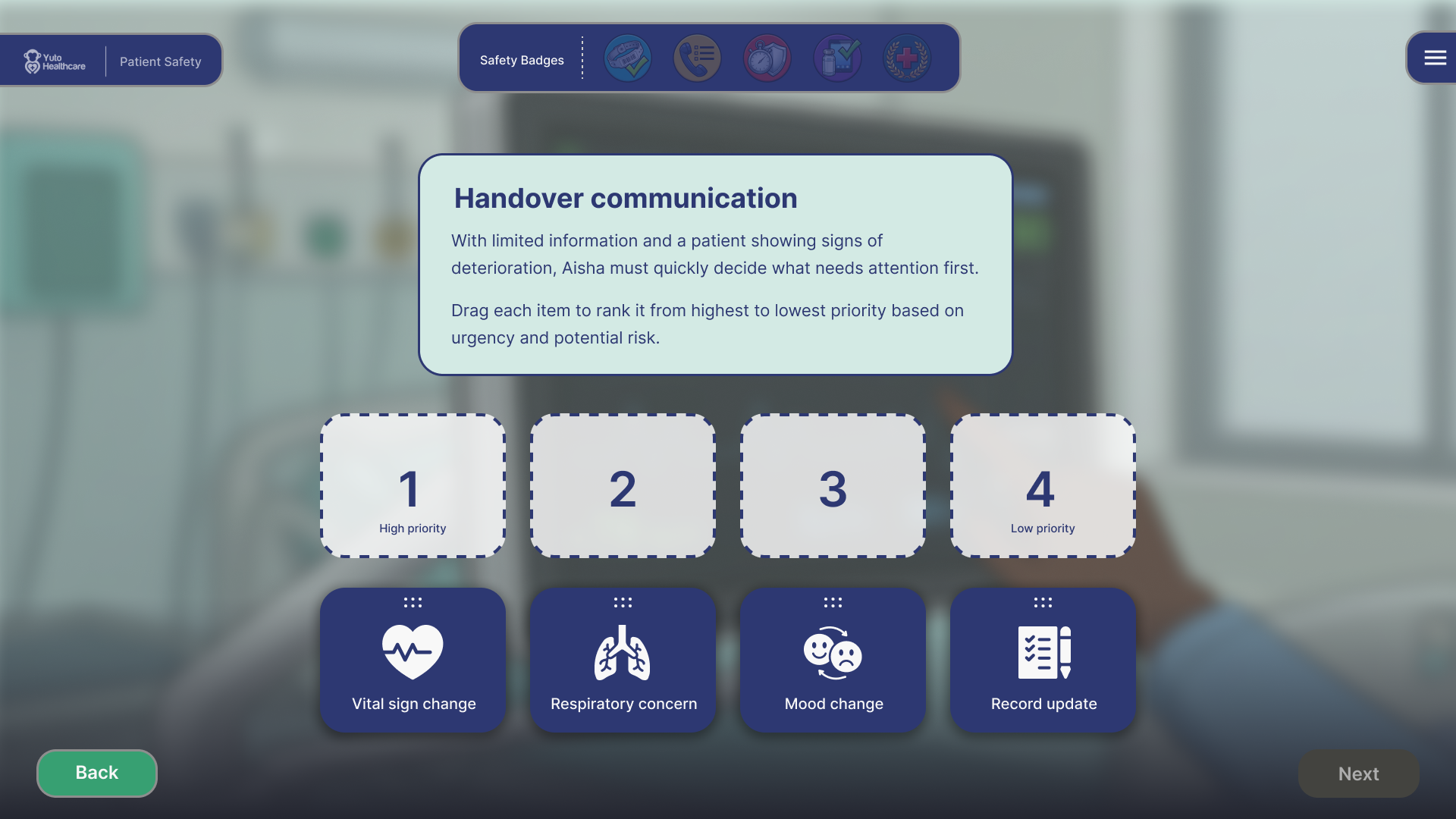
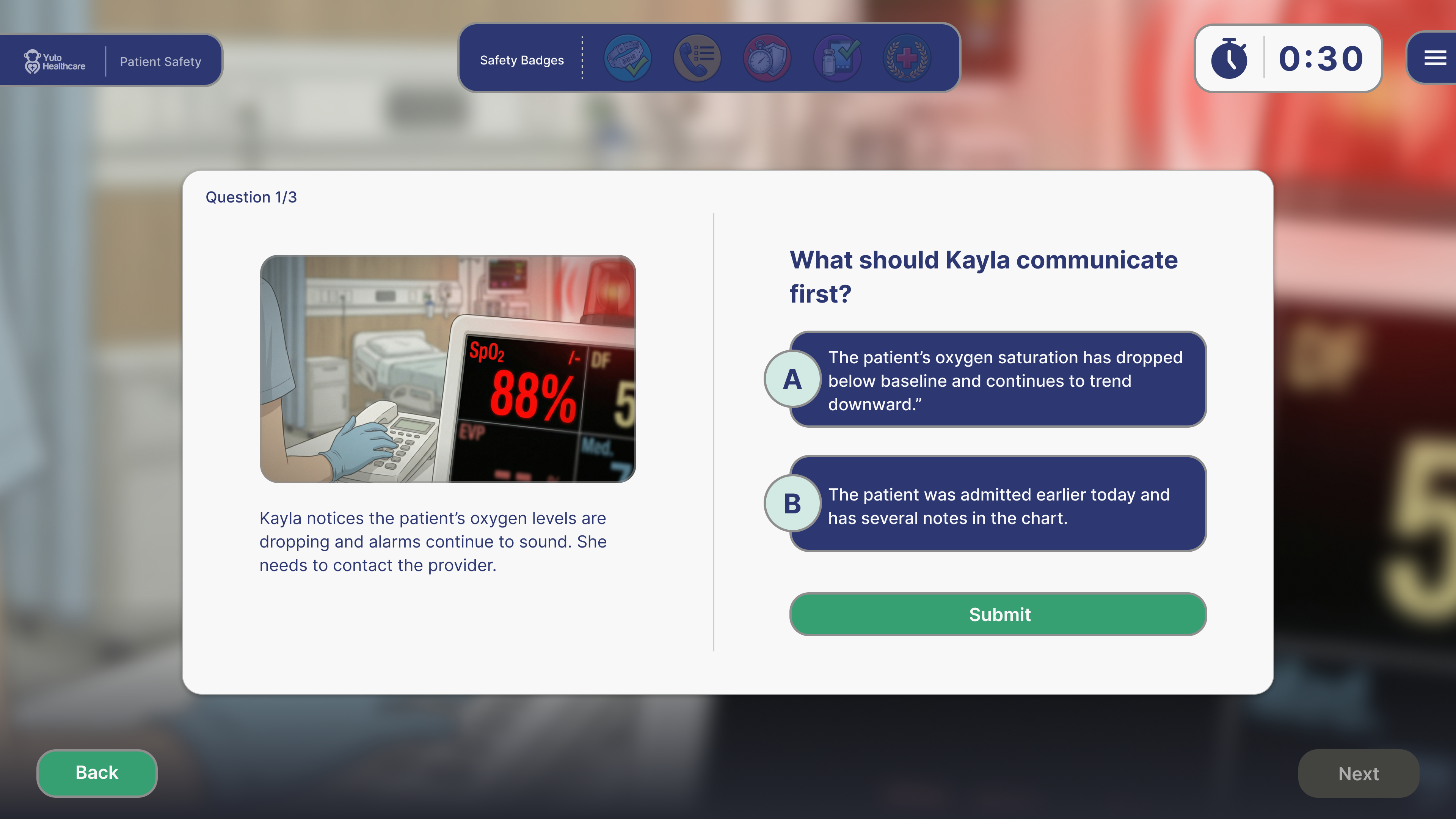
The solution was designed to close the gap between knowing a safety procedure and applying it under real clinical pressure. Rather than relying on a traditional content-first approach, the learning experience was built around realistic decision-making moments. Learners enter the challenge first, made a judgment call, and then received feedback and supporting context. This created a more active form of learning and made each concept feel tied to practice rather than policy alone.
Built around critical safety moments
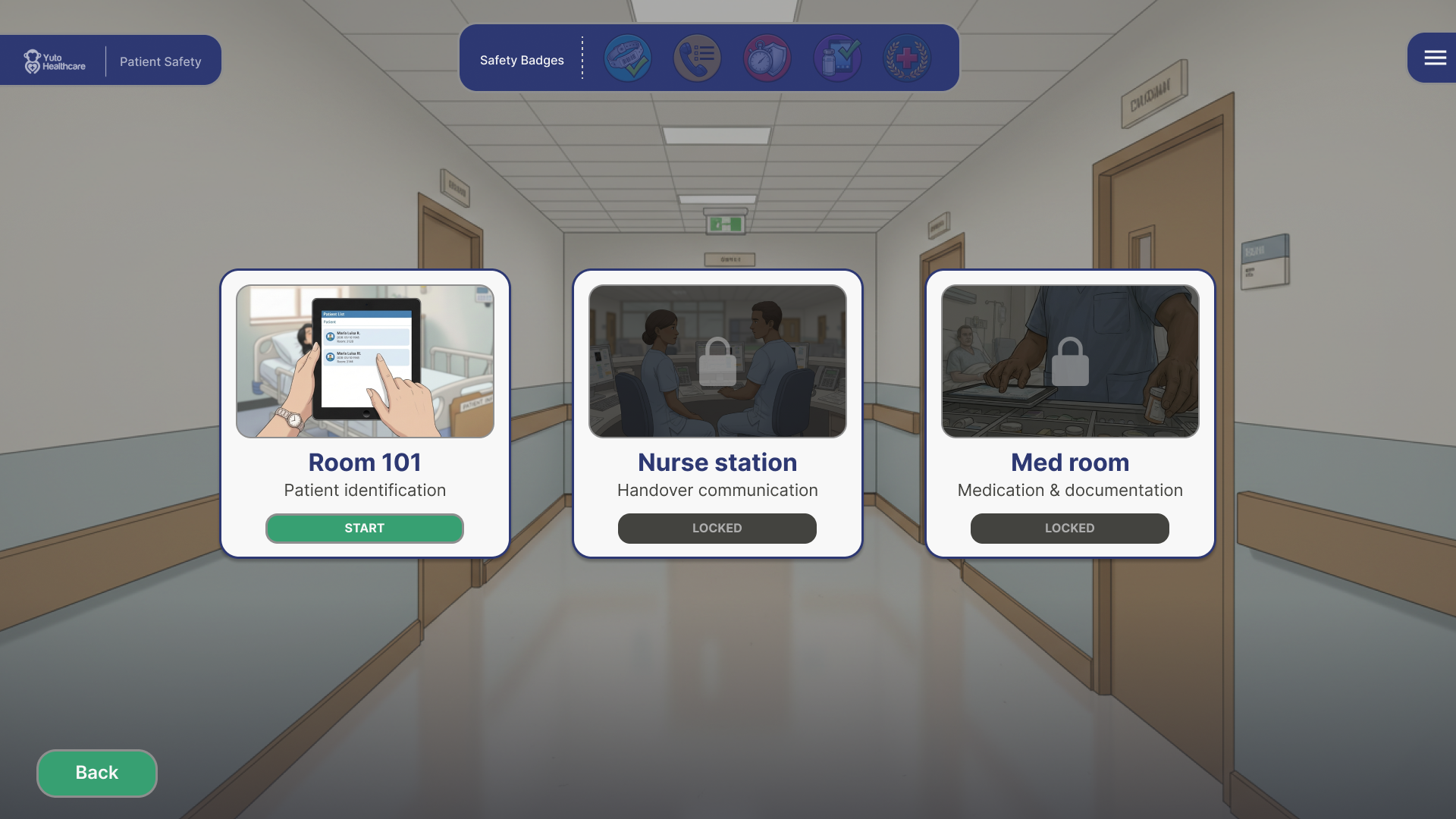
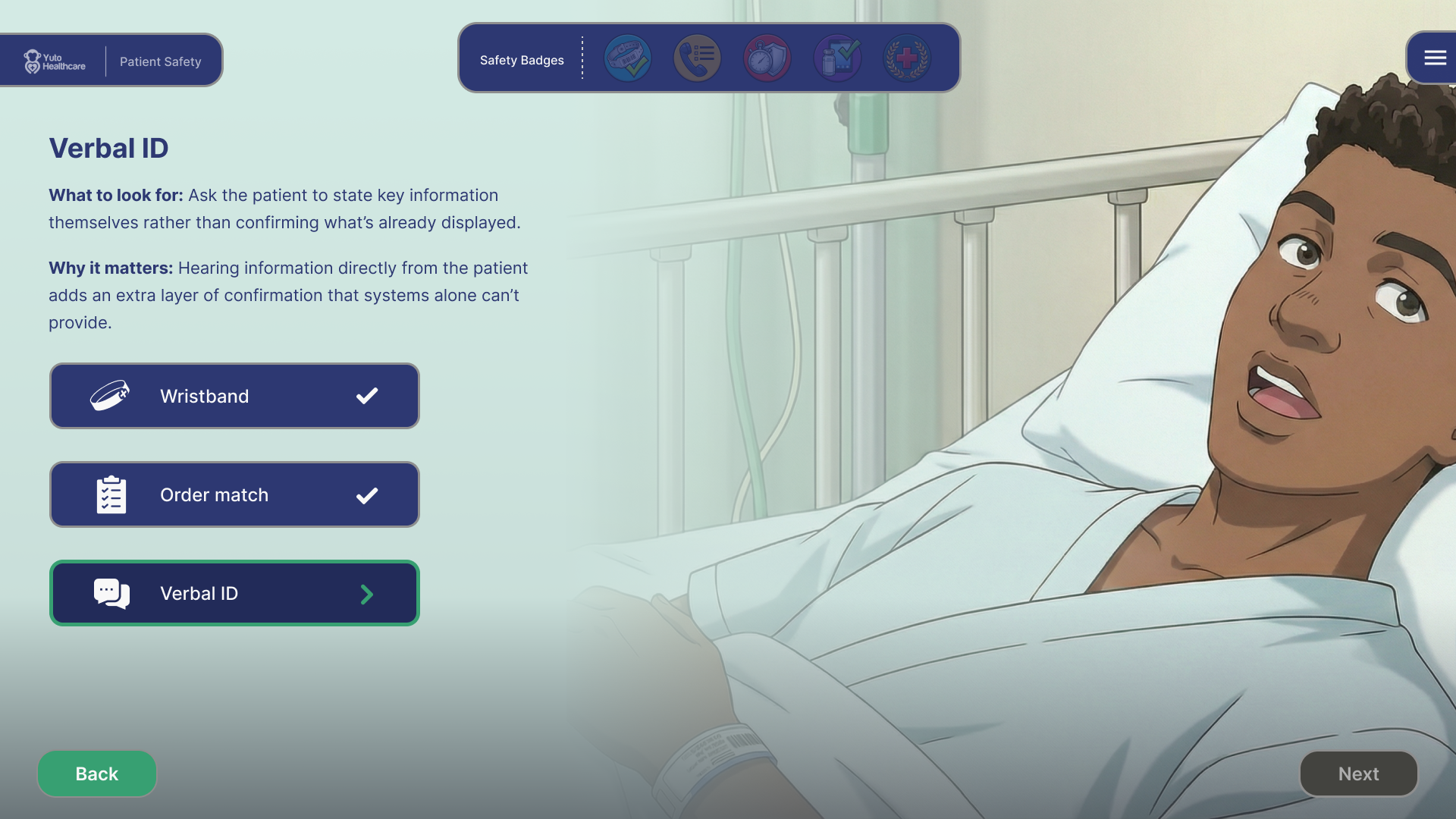
The course focused on three critical patient safety moments: patient identification, shift handovers, and medication administration. Each interaction was designed to reflect the kinds of distractions, ambiguity, and competing signals nurses often face on the job. The objective was not simply to test recall, but to help learners slow down, notice risk, and make safer choices in context.
Engagement with purpose
Scenario-based interactions, immediate feedback, and light gamified progression were used to keep the experience focused and engaging. Every design choice aimed to make patient safety feel concrete, applied, and emotionally real, without losing clarity or usability.
My role
I led the project end to end, shaping the instructional strategy, scenario design, interaction flow, visual direction, localization, and final build.
The result
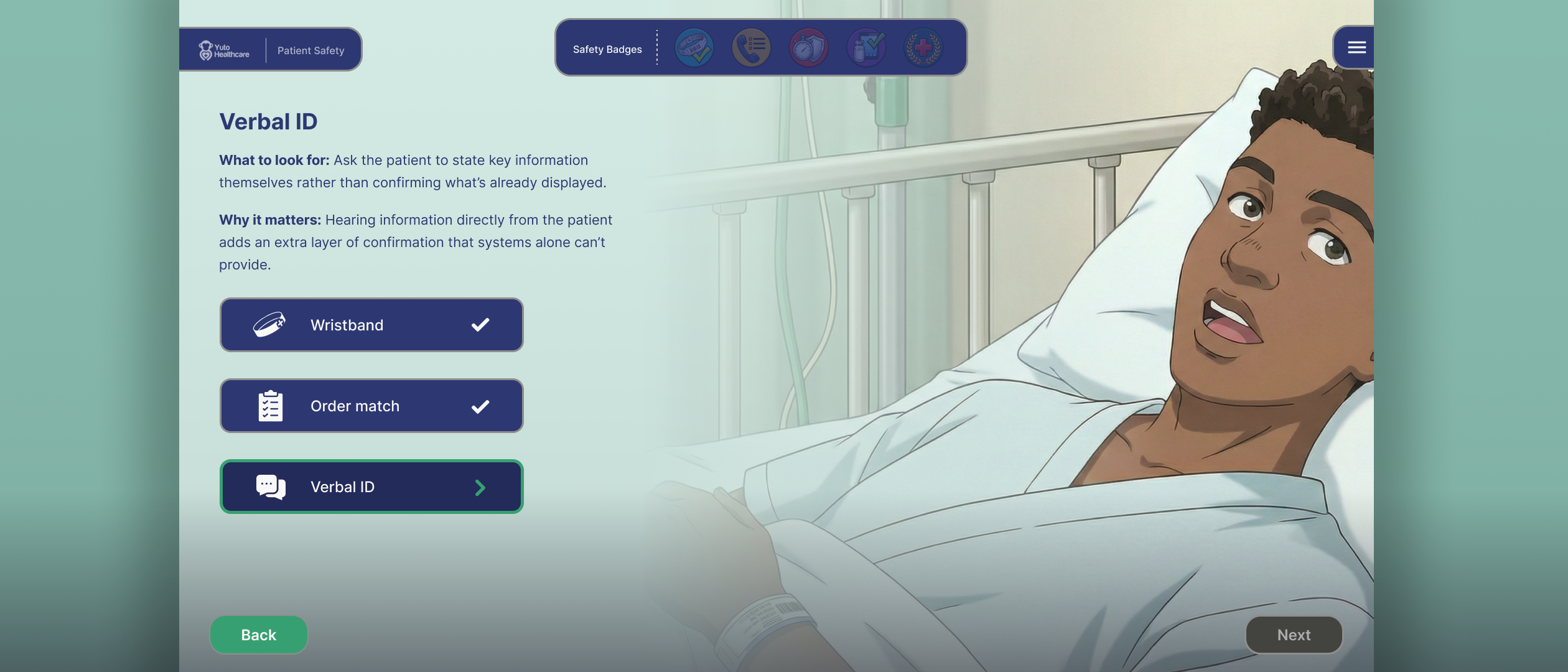
Validating a practice-first learning model
Designed as a 25-minute Storyline SCORM web course, the experience is structured into three focused lessons and reinforced through badge-based progression. More importantly, it demonstrates a stronger model for patient safety training, one centered on realistic decision-making rather than passive content consumption. By placing learners in moments of uncertainty, pressure, and consequence, the course moves the learning experience away from policy recall and closer to applied clinical judgment.
Concise by design, scalable by structure
The training was intentionally designed to be short, focused, and punchy, proving that even complex topics can be taught through compact experiences when the design is tightly aligned to practice. Its structure also creates a foundation that can scale, making it suitable not only for patient safety, but for broader technical and process-based training where decision-making matters.
Ready for multilingual delivery
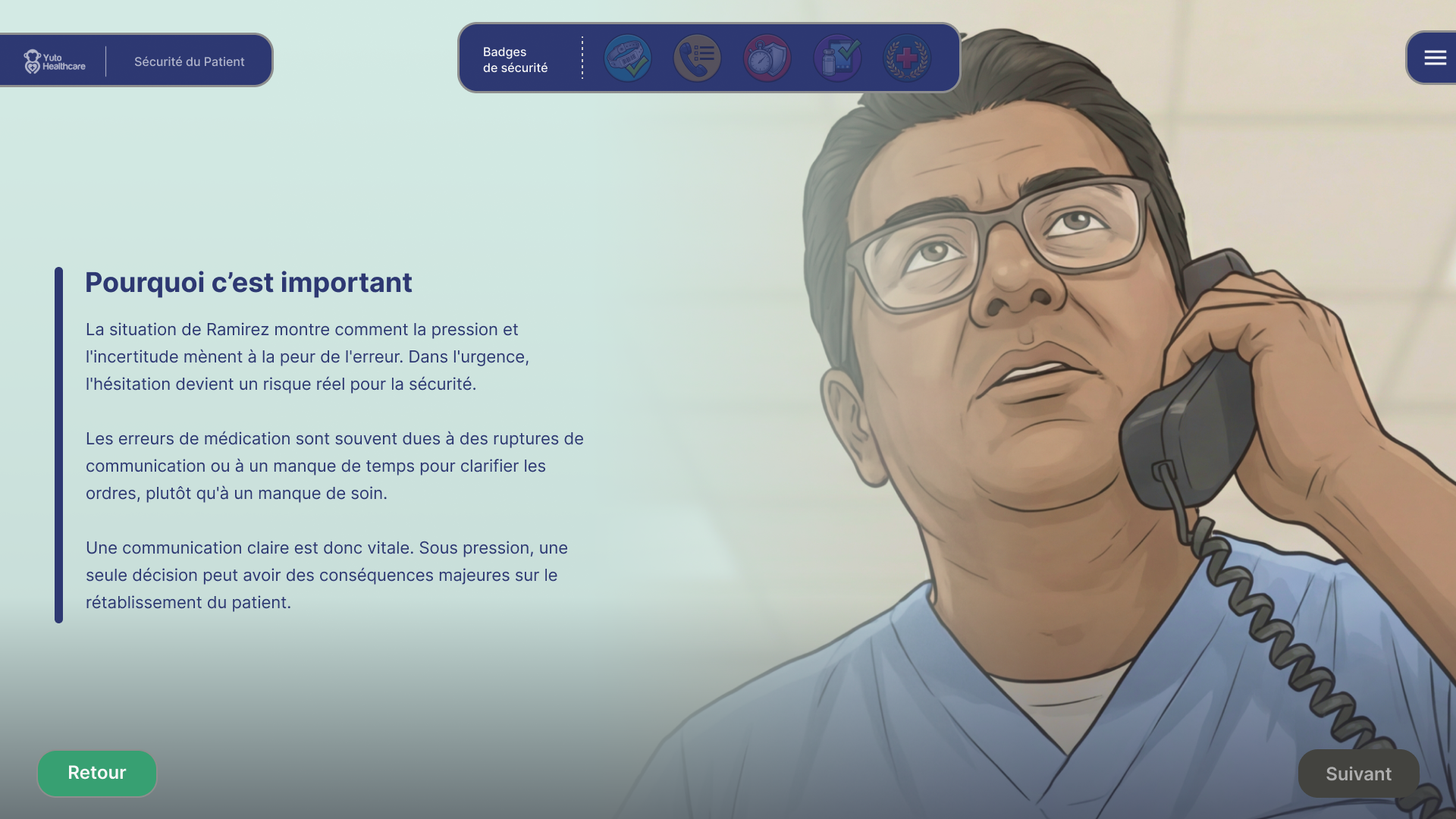
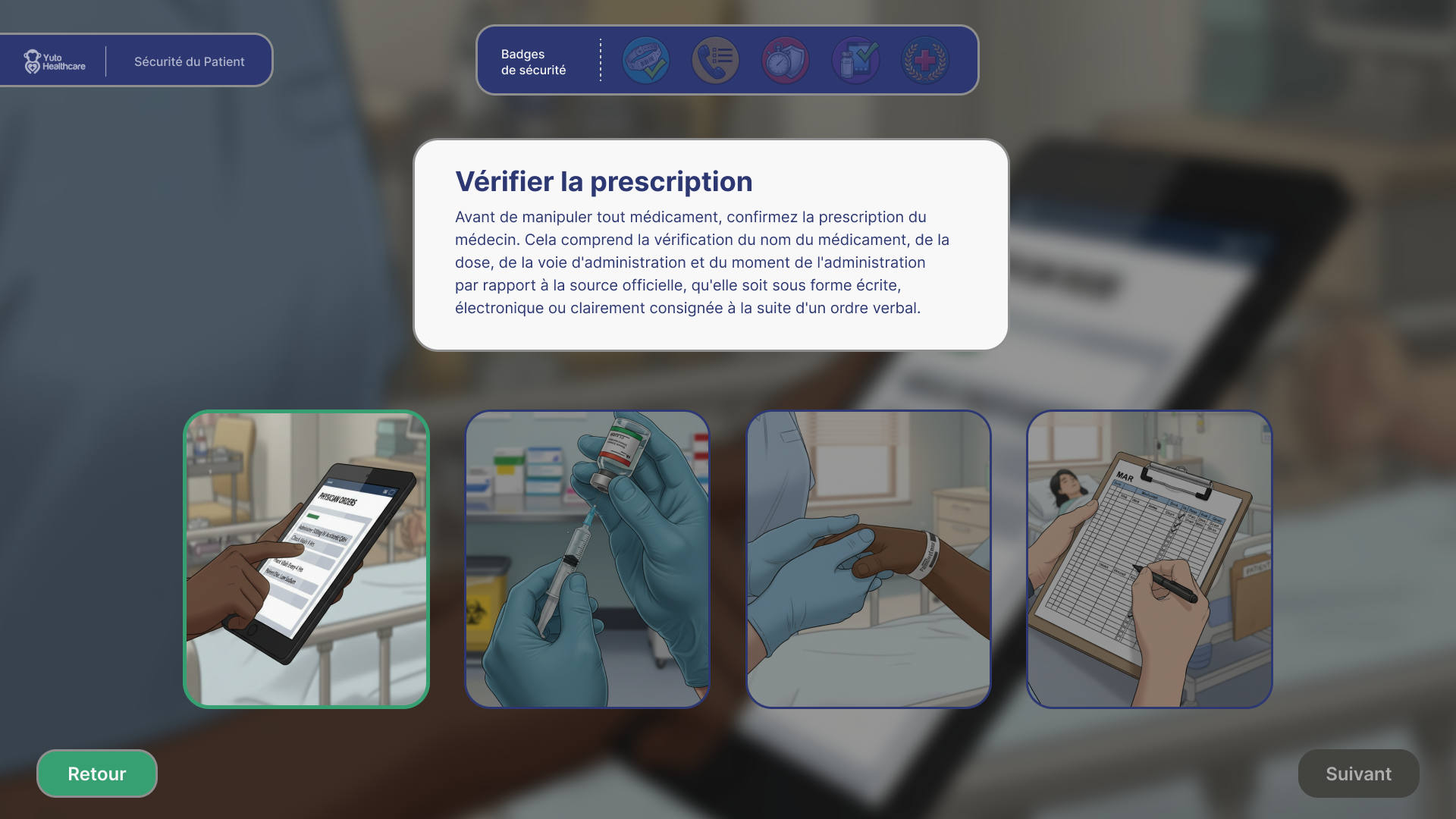
From the outset, the experience was conceived as a multilingual solution, with adaptation in English, Spanish, and French in mind. This reinforces its value as a scalable concept that can support distributed teams without losing clarity, usability, or instructional integrity.
A broader takeaway
The project ultimately reinforces a simple idea: for technical skills, the most effective training is the training that feels closest to the real task. The less abstract the experience, the more likely learners are to retain, apply, and act on what they have learned.
Project screengrabs

Looking for this level of quality?
I help teams build scalable, effective and engaging learning solutions. I’m currently available for new opportunities.